ArtsFunded guide
Audience & Reach for ACE: What to Include (Templates)
How to write the Audience and Reach section in your Arts Council England Project Grant application with examples, copy-ready paragraphs, and a simple template.
Published · By ArtsFunded editorial team
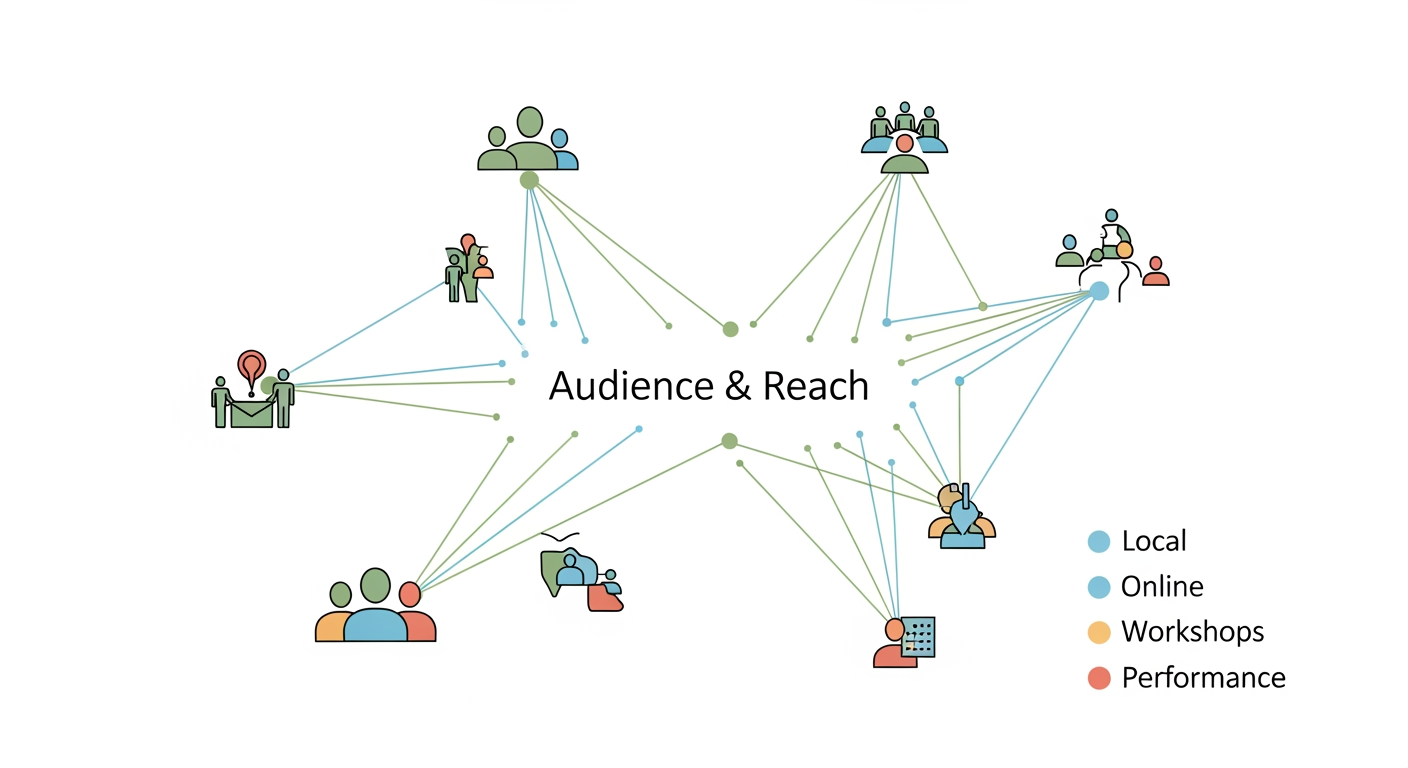
TL;DR: Funders want to know who you will reach, how you will reach them, and why those people matter. Stay specific, evidence-based, and realistic about numbers.
Getting the Audience and Reach section right in an Arts Council England Project Grant can be the difference between “good idea” and “fundable plan.” Reviewers look for a confident understanding of who benefits, how you will reach them, and what makes your project inclusive.
In this guide, we unpack what ACE means by “audience,” how to estimate numbers sensibly, and how to show genuine inclusion. You will also find copy-paste templates you can slot straight into your next application.
More ACE guides → ACE Hub
---
What is Arts Council England?
Arts Council England (ACE) is the national body that funds and supports the arts, museums, and libraries across England. It distributes money from the National Lottery and the government to help creative projects reach the public. ACE’s National Lottery Project Grants (NLPG) programme backs artists, organisations, and community groups to deliver work that benefits audiences and results in a strong artistic outcome.
---
What funders want (plain English version)
- Defined audience: spell out who the project is for, not “everyone.”
- Real reach: give realistic estimates of attendees, participants, or online viewers.
- Access for all: show concrete steps for inclusion such as BSL, captions, relaxed sessions, or travel help.
- Diversity: highlight mix of ages, backgrounds, and locations when relevant.
- Local connection: evidence that you are rooted in the community where activity happens.
- Partnerships: name who helps you find or engage your audience (schools, charities, community hubs).
Try ArtsFunded: Build audience plans and reach estimates that align with ACE criteria.
---
Common mistakes (with quick fixes)
- Mistake: Writing “open to everyone.”
Fix: Be specific. For example, “Families in Malvern with children aged 6 - 12,” or “local refugees and asylum seekers supported by X organisation.”
- Mistake: Over-promising reach.
Fix: Use achievable numbers. If your venue holds 100, do not promise 800. ACE values credibility over hype.
- Mistake: Confusing participants and audiences.
Fix: Participants create the work (workshops, co-design). Audiences experience it (shows, exhibitions). ACE asks for both.
- Mistake: Skipping inclusion detail.
Fix: Write a short paragraph on how you will make access part of delivery, not an afterthought.
- Mistake: Forgetting digital reach.
Fix: If online activity features, explain the platform, expected numbers, and how you will collect data (analytics, sign-ups, partner newsletters).
---
The step-by-step framework (copy this for your answers)
- Who your project is for
Describe the main group or groups: age, background, interests, geography. Example: “Young adults (16 - 25) in Wolverhampton interested in music and performance.”
- Where they are
Identify the location or setting. Example: “Community groups and youth hubs in the West Midlands.”
- Why they will care
Explain why the project appeals to them: content, theme, or format. Example: “The project celebrates food and storytelling from cultures represented locally.”
- How you will reach them
List channels and partners: schools, social media, email lists, community networks, venues. Example: “We will promote through Malvern Cube’s community newsletter (2,000 readers), local refugee group networks, and targeted Facebook ads.”
- Access and inclusion
Describe practical steps such as BSL interpreters, captions, accessible formats, travel bursaries, or relaxed sessions. Example: “Events are relaxed, with step-free access, BSL on one performance, and captions online.”
- Estimated numbers
State audience and participant numbers plus how you calculated them. Example: “Based on venue capacity and past events we expect 150 attendees and 20 active participants.”
- Measurement
Show how you will track engagement: headcounts, sign-ups, ticket sales, post-event surveys. Example: “We will gather postcode data and short feedback surveys to understand who we reached.”
---
Real examples you can adapt
Example 1 - Community Theatre Project
- Audience: Local residents aged 50+ in Malvern, including people facing isolation.
- Reach method: Malvern Cube mailing list, parish newsletter, Age UK groups.
- Access: Free tickets for carers, step-free venue, captioned matinee.
- Expected numbers: 200 attendees; 30 participants in workshops.
Example 2 - Young Creatives Film Project
- Audience: 16 - 25 year olds in Birmingham interested in digital storytelling.
- Reach method: Instagram reels, youth media groups, local colleges.
- Access: Free participation; subtitled screenings.
- Expected numbers: 20 participants; 400 online viewers.
Example 3 - Inclusive Festival
- Audience: Families and disabled audiences in Wolverhampton.
- Reach method: Local access organisations, targeted social media, schools.
- Access: BSL interpreters, relaxed sessions, accessible toilets, large-print materials.
- Expected numbers: 500 attendees; 50 volunteers and participants.
---
Quick tips for stronger answers
- Show local demand by quoting a partner or relevant stat.
- Use inclusive language. Swap “target” for “connect with” or “reach.”
- Stay realistic. Funders know what is achievable for your scale.
- Mention future potential if fresh audiences can stay involved beyond the project.
---
Related reading
- How to Write a Strong Arts Council England Project Grant
- ACE Project Grants: Need vs Outcomes (Examples You Can Adapt)
- ArtsFunded Blog - ACE Guides
---
Keep building momentum
Explore tools that help you plan audience pathways, map evidence and produce clear editable drafts without the guesswork. See how ArtsFunded supports ACE bids →