ArtsFunded guide
ACE Project Grants: Need vs Outcomes (Examples You Can Adapt)
Understand the difference between Need and Outcomes in Arts Council England Project Grants. Includes real examples and a copy-paste framework you can use.
Published · By ArtsFunded editorial team
TL;DR
- Funders back projects that solve a public need and deliver measurable outcomes.
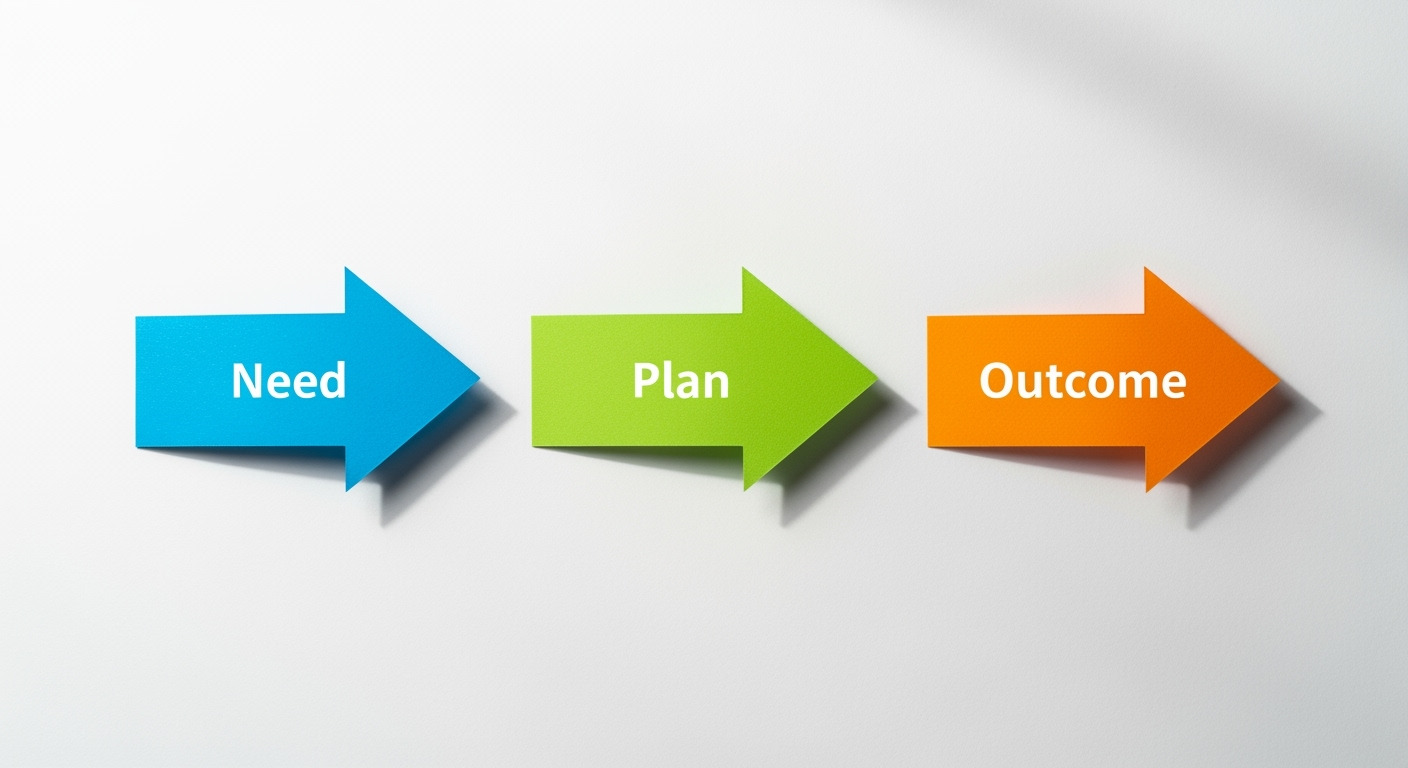
- Need = the gap or barrier faced by your community. Outcome = the change people experience because you delivered the project.
- Keep the logic tight: because there is a need, we will do these activities, producing these outcomes for these people.
- Watch the five minute walkthrough to see questionnaires, reviews, and drafts in one pass.
Many strong ideas lose funding because the Need and Outcomes sections blur into each other. ACE reviewers look for a clear cause and effect: a public problem (need) followed by a specific change (outcome). Nail that sequence and the rest of your application becomes easier to read, trust, and score.
Already mapping the full bid? Pair this with our ACE Project Grant framework for a start-to-finish walkthrough.
---
What funders want to see
- Evidence-backed need - who is missing out, what barrier exists, and how you know.
- Outcomes that matter - the measurable change those people will feel.
- Alignment - each outcome responds directly to the need you described.
- Evaluation plan - how you will prove the outcomes happened.
---
Common mistakes (and quick fixes)
- Writing about your funding gap.
Focus on community or audience need. Funders invest in public benefit.
- Describing need too generally.
Anchor it with two or three proof points: partner quotes, waiting lists, stats, or previous project feedback.
- Listing activities as outcomes.
Activities are what you do. Outcomes are what changes because you did them. “Run six workshops” vs “60 participants gain confidence.”
- Using vague language (“empower”, “inspire”).
Swap in concrete phrases such as “increase confidence”, “develop new skills”, “build stronger social connections.”
- Forgetting evaluation.
Every outcome needs a way to measure it: surveys, interviews, attendance, testimonials, or observation.
---
A five-step writing flow
- Define the Need.
Who is missing out? What barrier exists? Use short sentences and credible evidence. Example: “Only one venue in the district offers accessible performances. Local Deaf groups report feeling excluded.”
- Add Evidence.
Support the need with one or two facts: community quotes, local stats, demand data, or previous feedback.
- Write Outcomes.
Outcomes are the change for people. They should answer the need directly. Isolation → increased social connection; lack of access → improved accessibility.
- Map Activities to Outcomes.
Create a simple list or table showing which activity unlocks which outcome.
- Show How You Will Measure Success.
Mention two or three methods that prove each outcome happened: surveys, interviews, attendance tracking, testimonials, or observation.
---
Mini examples you can adapt
Youth Theatre Project Need - Schools have cut drama and young people lack creative outlets. Evidence - Three teachers confirm reduced provision; youth club waiting list of 40+. Outcomes - (1) 60 young people attend weekly sessions. (2) 75% report improved confidence. (3) 10 progress to volunteering or mentoring.
Inclusive Arts Festival Need - Deaf and disabled audiences face barriers to local events. Evidence - Two access audits and partner feedback confirm venues lack interpreters or captions. Outcomes - (1) 300 attendees experience fully accessible performances. (2) 85% report improved inclusion. (3) Four venues adopt access policies afterwards.
Rural Craft Residency Need - Isolated rural communities have limited cultural access. Evidence - County arts report shows 65% of villages have no arts provision. Outcomes - (1) 100 residents engage in workshops. (2) 20 exhibit new work locally. (3) Participants report stronger connection to neighbours.
Next steps
- Draft Need and Outcomes first; let them drive every activity and budget line.
- Revisit the full ACE Project Grant framework when you want the complete form walkthrough.
- Run a reviewer pass (inside ArtsFunded or with your team) before you generate the final answers.
Ready to draft? ArtsFunded builds questionnaires, reviewer notes, and full ACE drafts in minutes. Explore pricing →